2026 Best Black And White Lcd Display Options for Buyers?
As technology evolves, the market for Black And White LCD Displays continues to diversify. Recent industry reports indicate that the demand for these displays remains robust, particularly in sectors where clarity and readability are essential. According to a 2023 study by TechFuture Insights, the market growth for Black And White LCD Displays is projected to reach 15% annually over the next five years, driven by various applications in healthcare, automotive, and industrial sectors.
Renowned industry expert Dr. Emily Chen, a leading analyst at DisplayTech Research, asserts, "The simplicity and efficiency of Black And White LCD Displays make them a reliable choice for critical applications." This reflects a growing recognition of their utility. However, potential buyers must consider factors such as resolution, contrast ratio, and viewing angle to choose the best option.
While Black And White LCD Displays offer numerous advantages, the market does present challenges. Some models may lack advanced features found in color displays. Additionally, buyers must weigh the trade-offs between cost and performance. Ensuring the right fit for specific needs can be complex. This landscape prompts informed decision-making, making our guide essential for navigating the best options available in 2026.

The Evolution of Black and White LCD Displays in Recent Years
The evolution of black and white LCD displays has made significant strides in recent years. Early models were basic and limited in functionality. They often struggled with contrast and clarity, making them less appealing. Advances in technology have changed that dramatically. Today’s displays offer enhanced image quality. Sharpness and brightness are crucial for various applications.
Furthermore, the applications of black and white LCDs have expanded. They are no longer just for basic devices. Now, they are used in medical equipment, instruments, and even industrial machines. These displays provide reliable performance in challenging environments. Users often value durability and readability. They need to perform in high-stress conditions, and current displays meet these demands well.
However, some challenges remain. As technology develops, expectations rise. Users seek higher performance, affordability, and sustainability. Balancing these aspects can be tricky. While improvements have been notable, there is still room for growth. Manufacturers need to keep innovating. Transitioning to eco-friendly materials is essential. The focus is shifting towards more efficient production methods. Addressing these issues will shape the future landscape of black and white LCD displays.
Comparative Analysis of Leading Black and White LCD Brands
When examining the leading brands in black and white LCD displays, clarity and contrast are key factors. These displays are often valued for their ability to deliver sharp images under various lighting conditions. Performance can vary greatly among models, which might be a point of concern for buyers. Understanding the nuances in resolution and refresh rates helps in making informed decisions.
User feedback frequently highlights the importance of durability. Some models excel in robust construction, ensuring long-lasting use. This can be a critical factor for environments where devices are frequently transported or exposed to harsher conditions. However, not all brands are created equal; some might prioritize aesthetics over functionality, which could lead to buyer regret.
Pricing can also be inconsistent across different brands, making comparisons a bit challenging. Buyers may find that higher price tags do not always correspond to better quality. It is crucial to evaluate technical specifications closely. Lastly, manufacturers might promote their products heavily, but real-life performance can differ from marketing claims. It’s often the case that older models still hold up well against newer releases, prompting a deeper reflection on actual performance versus perceived value.
2026 Best Black And White LCD Display Options for Buyers
This chart illustrates the comparative analysis of various black and white LCD display options based on features such as resolution, refresh rate, and response time.
User Reviews and Ratings: Insights from 2026 Buyers
In 2026, buyers are increasingly leaning towards
black and white LCD displays. User reviews reveal a variety of preferences and criticisms.
Many appreciate the simplicity and clarity of these displays. They find them particularly effective in brightly lit environments.
However, some users mentioned that the contrast can occasionally suffer.
Another common point of feedback is regarding durability. Many reports suggest that while early models were robust,
newer ones may not withstand heavy usage. Additionally, the responsiveness of touch screens varies widely. Some users highlight
lag issues, especially in lower-end models. Reliability is a key factor when customers choose their displays.
Overall, insights from user ratings form a valuable base for potential buyers. They help identify which features matter most.
Yet, there remains room for improvement. Buyers often wish for a better balance between cost and performance.
As technology advances, manufacturers face pressure to meet these evolving expectations.
Future Trends in Black and White LCD Technology and Market Demand
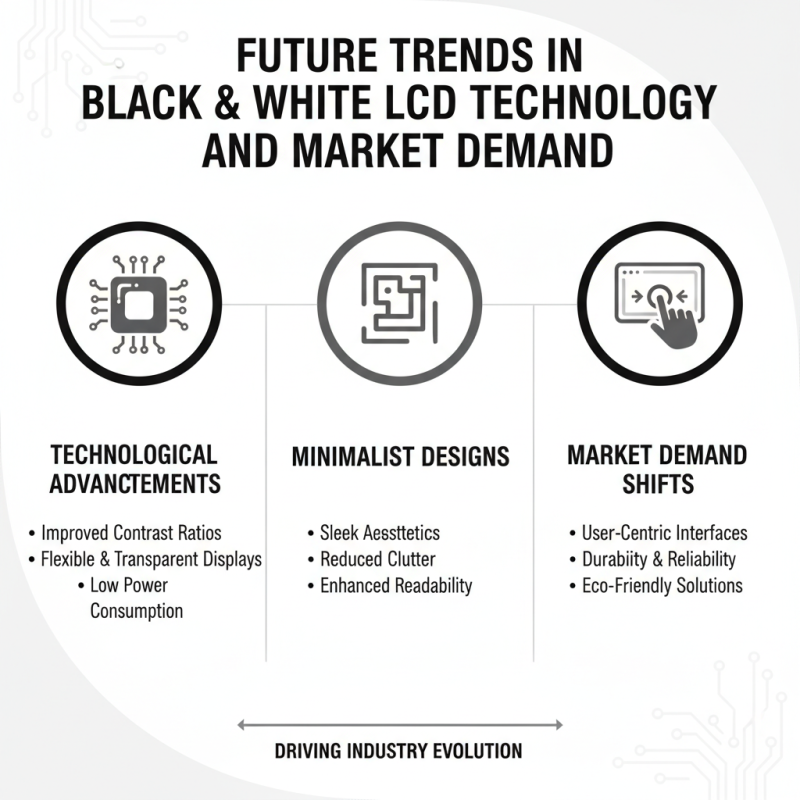
The black and white LCD market is evolving. As technology advances, we see innovative trends shaping the industry. Minimalist designs are becoming more popular. Consumers prefer simpler interfaces that enhance usability. This shift highlights the importance of clarity and functionality in devices.
Market demand for these displays is set to rise. Many industries, like healthcare and education, rely heavily on black and white screens. They value the reliability and readability that these displays offer. However, some challenges persist. The technology must balance cost with functionality. Not every manufacturer meets the high standards expected by professionals.
Another emerging trend is energy efficiency. More users are looking for sustainable options. With increasing environmental concerns, manufacturers need to focus on greener technologies. This will require adapting existing designs to minimize energy consumption. While the future appears promising, industry players must ensure they are ready to meet changing consumer expectations. There's room for improvement in achieving both performance and sustainability.