How to Choose the Best TFT Color Monitor for Your Needs?
In today's digital age, selecting the right TFT color monitor can be daunting. Industry expert Jane Smith once noted, "The right monitor can elevate your work and enhance your experience." With various options available, understanding your needs is essential.
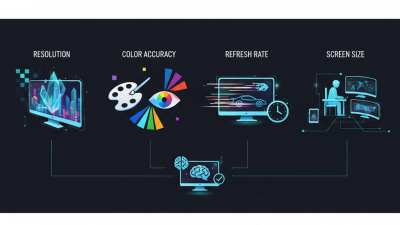
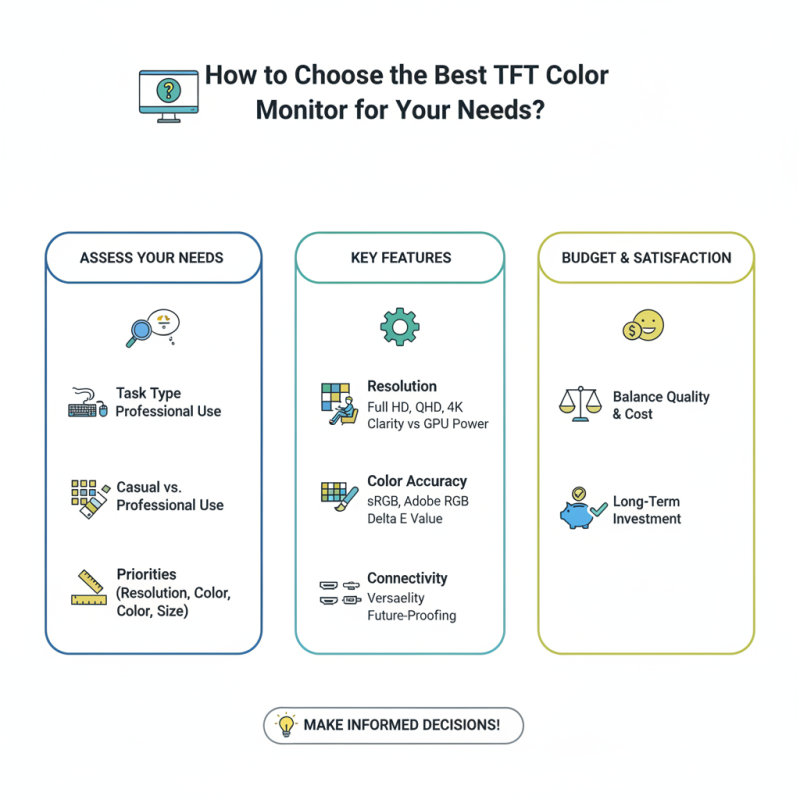
When choosing a TFT color monitor, consider factors like resolution, color accuracy, and size. While high resolutions are attractive, they may not be necessary for casual use. Sometimes, the best choice varies based on specific requirements. Users often overlook their actual tasks and pick flashy features instead.
Another crucial aspect is connectivity options. A monitor with versatile connections can save you from future headaches. However, these features can vary significantly among models. Reflecting on your usage patterns is vital, as it might lead to a more practical decision. Balancing quality and budget is often a challenging task, but it can result in long-term satisfaction with your TFT color monitor.
Understanding TFT Monitor Technology and Features
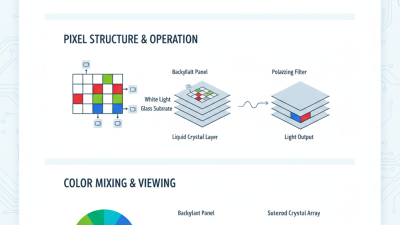
When selecting a TFT color monitor, understanding its technology is crucial. TFT stands for Thin Film Transistor technology. This is a type of LCD that improves image quality. It offers sharper pictures and better color reproduction than older monitors. If you're into gaming, a fast response time is key. Look for monitors that feature 60 Hz or higher refresh rates. This enhances your gaming experience.
One important factor is the resolution. Many monitors come in 1080p or 1440p. Higher resolutions provide better detail. Yet, they can also increase the price. Consider what you really need. If you're only browsing or watching videos, 1080p should suffice.
Tips for choosing: always check the viewing angles. A monitor with poor angles can distort colors. Test different monitors in person if possible. Ensure your monitor has the right connectivity options for your devices. Sometimes, features like built-in speakers or USB ports matter little. Think about your priorities. Reflect on what features you'll actually use.
Identifying Your Specific Usage Needs and Preferences
Choosing the right TFT color monitor can be daunting. Your specific usage needs play a vital role in this decision. For example, graphic designers typically prioritize color accuracy and resolution. According to a report from the International Display Manufacturers Association, color-critical applications demand monitors that cover at least 99% of the Adobe RGB color space. This ensures that designers see true-to-life colors.
In contrast, gamers may seek fast response times and high refresh rates. A study by the Display Performance Metrics Working Group indicates that monitors with a refresh rate of 144Hz or higher can enhance the gaming experience significantly. Many gamers are willing to sacrifice color accuracy for smoother visuals. This choice reflects a common balancing act between visual fidelity and performance speed. Understanding what drives your usage preferences is crucial.
Think about how you'll use the monitor daily. Will it be for gaming, photo editing, or general office work? Each use case requires different specifications and features. It's not just about the numbers; user comfort and personal preference matter too. A monitor that feels great visually might still cause discomfort. Balancing practical needs with personal enjoyment can be challenging yet rewarding.
Evaluating Key Specifications: Resolution, Refresh Rate, and Size
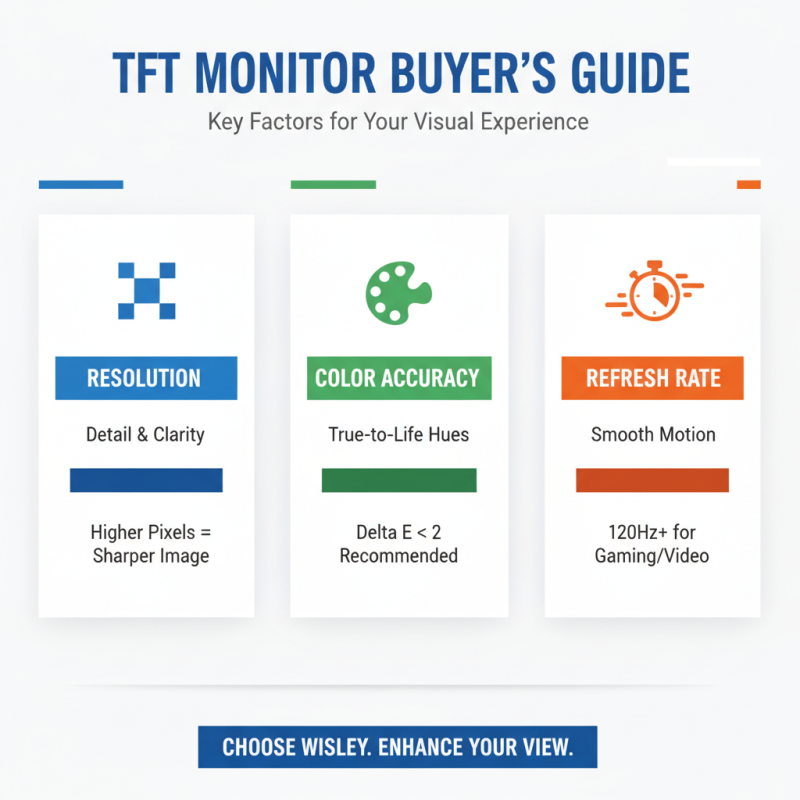
When selecting a TFT color monitor, key specifications like resolution, refresh rate, and size are critical. A higher resolution offers sharper images, making it essential for graphic design or gaming. For instance, a Full HD (1920x1080) display is common. However, a 4K (3840x2160) resolution provides even better clarity but can strain less powerful systems.
Refresh rates influence how smoothly visuals appear on screen. Most monitors function at 60Hz, but gamers often prefer 120Hz or higher to reduce motion blur. Reports indicate that 144Hz displays can significantly enhance the gaming experience. Yet, users must consider their hardware capabilities to avoid overpaying for features they cannot utilize effectively.
Size matters too. Common screen dimensions range from 21 to 32 inches. Smaller monitors suit smaller workspaces, while larger ones provide an immersive experience. However, this can lead to neck strain if positioned improperly. Evaluating your personal needs and usage patterns is crucial, as a poorly chosen monitor could result in discomfort or reduced productivity.
How to Choose the Best TFT Color Monitor for Your Needs?
| Monitor Size |
Resolution |
Refresh Rate (Hz) |
Aspect Ratio |
Panel Type |
| 24 inches |
1920 x 1080 (Full HD) |
60 |
16:9 |
IPS |
| 27 inches |
2560 x 1440 (Quad HD) |
75 |
16:9 |
VA |
| 32 inches |
3840 x 2160 (4K) |
60 |
16:9 |
IPS |
| 23.8 inches |
1920 x 1080 (Full HD) |
60 |
16:9 |
TN |
| 34 inches |
3440 x 1440 (UltraWide) |
100 |
21:9 |
VA |
Comparing Brands and Models for Quality and Performance
When selecting the best TFT color monitor, you'll encounter various brands and models. Each one has unique features. Evaluating quality and performance can be challenging. Focus on resolution, color accuracy, and refresh rate. These factors directly impact your visual experience.
Consider the specifications carefully. A higher resolution provides sharper images. Color accuracy is crucial for designers and gamers alike. Refresh rate affects motion clarity. You might prefer one over the other. Sometimes, personal preference plays a big role.
Tips: Check user reviews for real-world performance insights. Don’t overlook warranty options. They can save you from potential issues. It's vital to balance price and quality. Higher cost doesn’t always mean better performance. Reflect on your specific needs before making a choice. After all, the right monitor can significantly enhance your daily tasks and entertainment.
Assessing Price Range and Warranty Options for Value
When choosing a TFT color monitor, considering price range and warranty options is crucial. Not all monitors are created equal. A high price doesn’t guarantee the best quality. Research is essential. Examine your budget to find what fits without overspending.
Warranty plays a significant role. A one-year warranty might seem standard. However, many issues arise after that period. Look for options offering longer warranties. Some brands provide up to three years, which gives extra peace of mind. This is worth the investment if budget allows.
Tips: Evaluate your usage. If it's for gaming, opt for one with a high refresh rate. For design work, color accuracy is key. Check reviews. They often highlight real-life experiences with monitors and their warranties. Do compare prices online. Some sites offer significant discounts or bundles. Remember to ask yourself: Are you paying for features you won’t use?