Why Choose E Paper Display Over Lcd Display Modules?
The evolution of display technology has brought significant advances in visual solutions. The choice between E Paper Display LCD Display Modules is crucial for many applications. Industry reports show that e-paper technology offers remarkable benefits, especially in terms of power consumption. According to a study by the Display Alliance, e-paper displays consume up to 90% less energy than traditional LCDs.
Dr. James Larson, a leading expert in display technologies, stated, "E-paper is revolutionizing how information is presented, especially in low-power applications." This highlights the growing acceptance of e-paper in various sectors, such as e-readers and smart wearables. With its ability to maintain visibility in bright light and provide a wider viewing angle, e-paper is gaining traction.
Despite its advantages, e-paper technology is not without limitations. Refresh rates lag behind LCDs, making it unsuitable for dynamic content. As industries weigh their options, the importance of selecting the right display technology cannot be overstated. Understanding the specific needs and limitations of both E Paper Display LCD Display Modules is essential for optimizing performance and user experience.
Advantages of E-Paper Displays in Energy Efficiency Compared to LCD
E-paper displays have gained popularity in recent years due to their
energy efficiency. Unlike LCDs, they consume power only when changing content. This means that once an
image is displayed, it remains visible without drawing additional energy. Imagine reading an e-book. The screen stays
clear, and your battery lasts for weeks.
In contrast, LCD displays require constant power to maintain images. This leads to quicker battery drain,
especially in portable devices. Plus, e-paper is easy to read in bright sunlight. Unlike LCDs, which can struggle with
glare, e-paper mimics the appearance of ink on paper. This makes it more comfortable for long reading sessions.
While e-paper displays excel in energy efficiency, they do have limitations. Refresh rates are slower, making them less suitable for dynamic content like videos. Additionally, colors are limited compared to vibrant LCDs. These drawbacks are worth considering based on your needs. Energy efficiency is often a trade-off against performance.
Market Trends: Growth of E-Paper Technology Versus LCD Displays
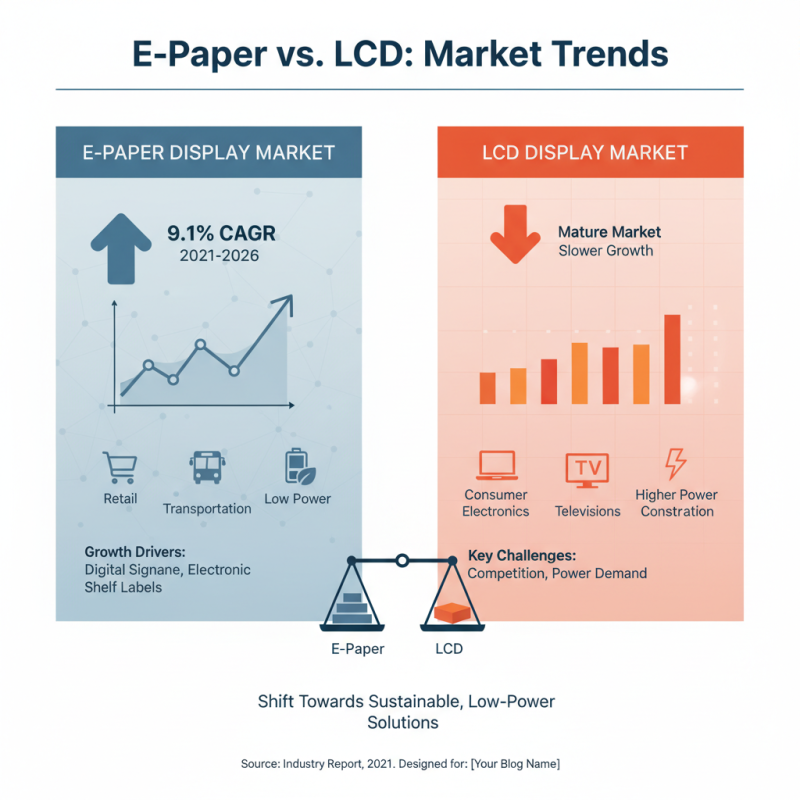
The market trends regarding e-paper technology and LCD displays reveal significant shifts. A recent report indicated that the global e-paper display market is projected to grow at a CAGR of 9.1% from 2021 to 2026. This growth reflects an increasing demand in sectors like retail and transportation. E-paper displays, known for their low power consumption, are ideal for applications requiring constant visibility, such as digital signage and electronic shelf labels.
Conversely, the LCD display market faces challenges. Despite a dominant position, it shows signs of stagnation. Market research suggests that the LCD segment is expected to grow at a slower pace, around 3.4% CAGR during the same period. While LCD screens are widely used, they consume more energy and can strain the eyes over prolonged use. E-paper offers a softer reading experience, mimicking the look of ink on paper.
These trends indicate a shift in consumer preferences. Industries are increasingly adopting e-paper for its sustainability. However, e-paper technology still has drawbacks. High costs and limited color options can deter widespread adoption. As the market evolves, finding a balance between innovation and accessibility remains a challenge for manufacturers.
Comparative Analysis of Lifespan: E-Paper vs. LCD Modules
E-paper displays are gaining popularity, especially in specific applications. They consume very little power, making them efficient for long-term use. This power efficiency directly contributes to their impressive lifespan. In contrast, LCD modules tend to drain battery life more quickly, thereby requiring more frequent replacements.
Lifespan is a crucial factor when choosing between these two technologies. E-paper can last for years without significant degradation. Users can rely on e-paper for extended periods with minimal maintenance. LCD displays, however, typically have a shorter lifespan. They often suffer from issues like backlight failure or color distortion. This can be frustrating for users who require reliable performance over time.
It's essential to consider your specific needs. While e-paper offers longevity, it may not be suitable for all applications. LCD displays have greater capabilities for color vibrancy and speed. However, they may lead to more waste if they fail prematurely. The choice ultimately depends on balancing lifespan with functionality. Users should evaluate their projects carefully before making a decision.
Comparative Lifespan Analysis: E-Paper vs. LCD Modules
User Experience: Readability in Various Lighting Conditions
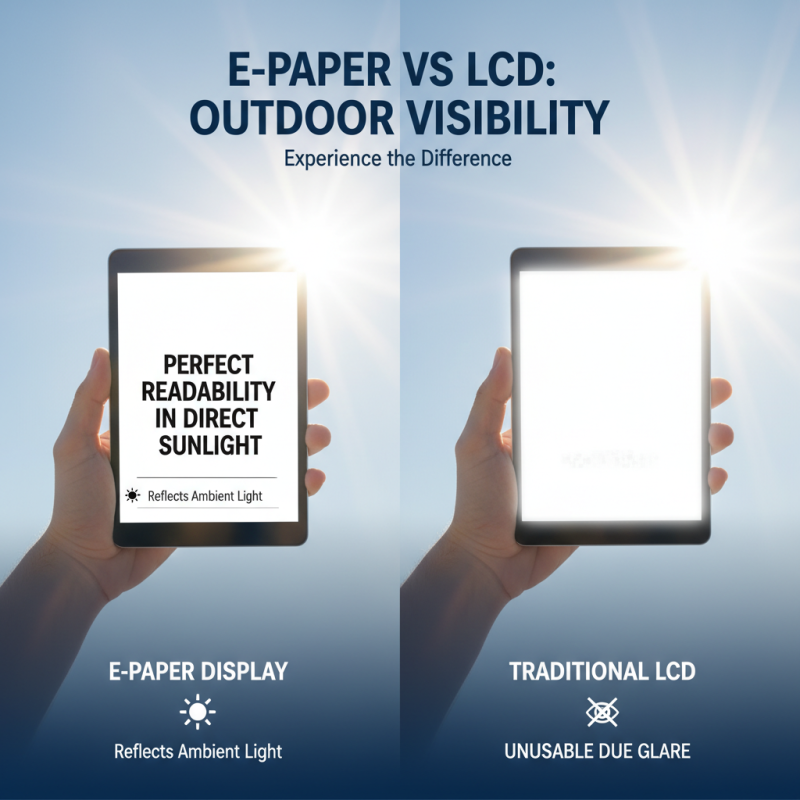
E-paper displays offer unique advantages over traditional LCDs, especially regarding readability in various lighting conditions. Under bright sunlight, LCD screens can become nearly impossible to read. The glare can be overwhelming. E-paper, however, reflects ambient light, ensuring clarity without straining the eyes. This characteristic enhances the user experience dramatically in outdoor settings.
Tips: Always test your device in natural light before purchasing. Understand how different lighting can impact your reading experience.
In low-light situations, LCD displays might require backlighting. This can cause eye fatigue if used for extended periods. E-paper displays, on the other hand, maintain their readability without needing extra light. This ultimately provides a comfortable viewing experience at night or in dimly lit spaces.
Tips: Opt for an e-paper display if you often read at night. Your eyes will thank you later. The technology also mimics the look of ink on paper, which many find aesthetically pleasing. However, it may not suit users needing vibrant colors or fast refresh rates. Reflections and refresh times can be a challenge in certain scenarios. Always consider your specific needs before making a decision.
Environmental Impact: Sustainability of E-Paper Displays Over LCDs
E-paper displays have emerged as a more sustainable option compared to LCD displays. According to a recent report by the International Energy Agency, e-paper technology consumes significantly less power. For instance, e-paper devices typically draw power only during updates, while LCDs require continuous energy to maintain brightness. This means that the overall energy footprint of e-paper is much lower, promoting better environmental practices.
Furthermore, the production process of e-paper is generally less harmful compared to that of LCDs. A study from the Green Electronics Council reveals that LCDs utilize a range of toxic materials, including lead and cadmium. These substances can cause environmental damage if not disposed of properly. E-paper, in contrast, is made from more benign materials. However, it's essential to note that recycling programs for e-paper are still developing. The lifecycle analysis indicates there are gaps in the recycling process for e-paper displays.
Despite these benefits, challenges remain. The manufacturing process for e-paper can be less efficient at scale. Some manufacturers may struggle to meet rising demand while maintaining eco-friendly practices. This uneven progress raises questions on how quickly e-paper can replace traditional display technologies entirely. Addressing these issues will be crucial for maximizing e-paper’s potential as a sustainable alternative.