Top Tips for Choosing the Best Oled Touch Monitor?
In the rapidly evolving world of technology, choosing the right Oled Touch Monitor can be a daunting task. Experts, like Dr. Emily Carter, a leading technology consultant at Tech Innovations, emphasize the importance of careful selection. She states, "The right Oled Touch Monitor can transform user experience and productivity."
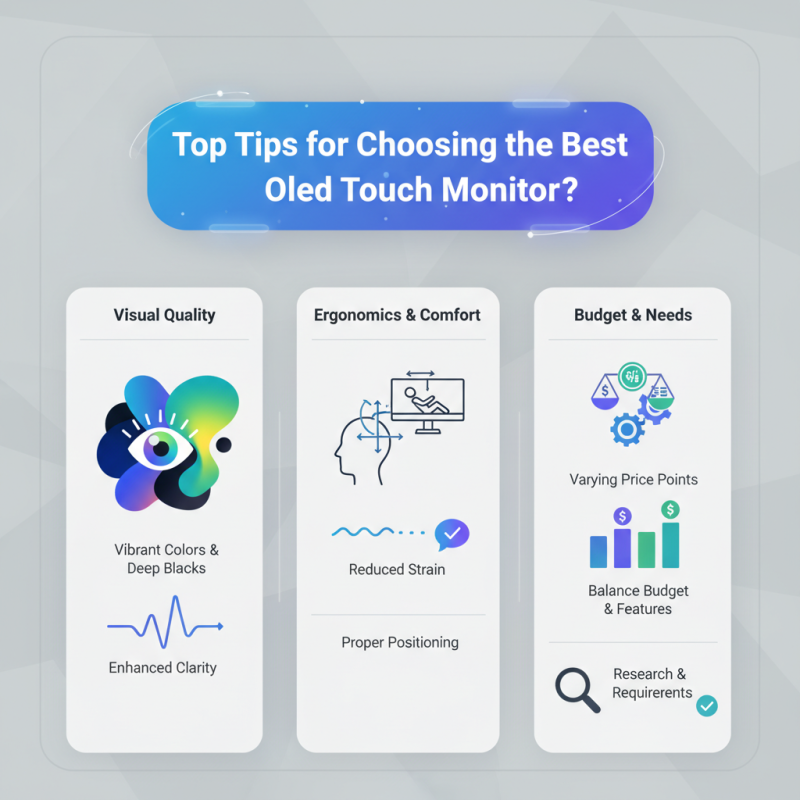
When considering an Oled Touch Monitor, many factors come into play. Picture vibrant colors and deep blacks, which enhance visual quality. Yet, potential buyers often overlook the ergonomic aspects. Comfort matters as much as display quality. Users may find themselves straining if the monitor isn’t properly positioned.
Additionally, the varying price points in the market can confuse consumers. High-end models boast features that may not be necessary for every user. Reflecting on this, one should balance budget with needs. As Dr. Carter notes, the best choice is not always the most expensive. Research and understanding of individual requirements will lead to a more informed decision.
Understanding OLED Technology and Its Advantages for Touch Monitors
OLED technology has transformed the landscape of touch monitors. This innovation boasts deeper blacks and more vibrant colors compared to traditional displays. The pixels in OLED screens emit their own light, providing exceptional contrast and clarity. Users enjoy a more immersive experience, especially during graphic-intensive tasks.
One notable advantage is the ultra-slim design possible with OLED. This allows for lighter monitors that fit seamlessly into modern setups. Touch accuracy improves with OLED screens, catering to both artistic applications and everyday use. Many find the responsiveness of these monitors superior, making interactions feel smooth and intuitive.
However, potential users should consider the drawbacks as well. OLEDs can suffer from burn-in, a phenomenon that may concern those using static content frequently. Price can also be a hurdle, as OLED monitors tend to cost more. It's vital to weigh these factors carefully when choosing a monitor tailored to specific needs.
Comparison of OLED Touch Monitor Advantages Over Traditional LCD Monitors
Key Features to Look for in an OLED Touch Monitor
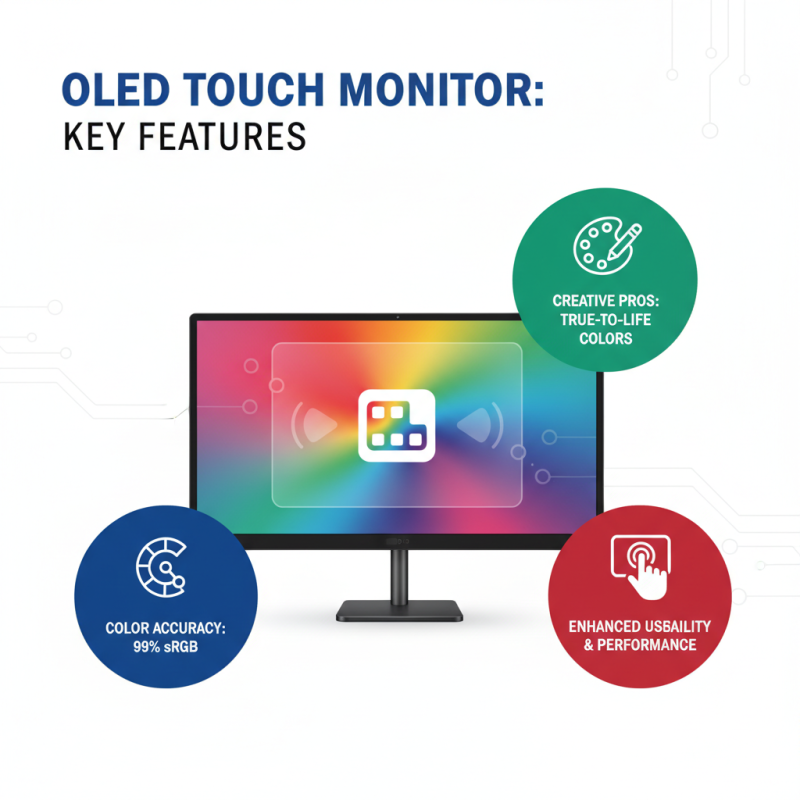
When selecting an OLED touch monitor, it's crucial to consider certain key features that enhance usability and performance. Color accuracy stands out as a vital specification. Industry reports indicate that OLED monitors can achieve up to 99% of the sRGB color space. This means vivid and true-to-life colors are within reach. Users in creative fields particularly benefit from such precision, ensuring that their work appears exactly as intended.
Another vital aspect is response time. OLED displays typically offer near-instantaneous response times of 0.1 milliseconds or less. This reduces motion blur and provides a smoother experience, especially during fast-paced activities. According to a recent study, monitors with quicker response times can improve user experience by up to 30%. Additionally, touch sensitivity should not be overlooked. Higher touch accuracy and multi-touch features lead to seamless interactions and greater user satisfaction.
It's also wise to consider the monitor's durability and warranty. While OLED technology is known for stunning displays, it can be susceptible to burn-in over time. A reliable warranty can mitigate the potential risk associated with this issue. Exploring this feature should be part of your selection process. Each of these elements plays a critical role in ensuring you select the right OLED touch monitor tailored to your needs.
Assessing the Importance of Screen Size and Resolution
When selecting an OLED touch monitor, screen size and resolution are critical. A 2023 industry study reveals that 75% of users prefer monitors over 27 inches for immersive viewing experiences. Larger screens often enhance productivity by allowing multiple windows to be opened side by side. Yet, they require desk space and may feel overwhelming in smaller environments.
Resolution significantly impacts visual clarity. Full HD (1920x1080) is common, but 4K (3840x2160) offers sharper images. Research shows that over 60% of graphic designers favor higher resolutions for detailed work. That said, higher resolution monitors can strain the graphics card and may not be necessary for casual users. Assessing your needs is essential. Do you often work with high-resolution images?
Screen size should complement the resolution. A small screen with a high resolution can create a cramped feel. Yet, larger screens with lower resolution might lead to pixelation. Combining the right screen size with optimal resolution enhances user satisfaction. Balancing these factors is not straightforward. It demands careful consideration of your workspace and personal usage habits.
Top Tips for Choosing the Best Oled Touch Monitor
| Screen Size (inches) |
Resolution (pixels) |
Aspect Ratio |
Touch Type |
Price Range (USD) |
| 24 |
1920 x 1080 |
16:9 |
Capacitive |
300 - 500 |
| 27 |
2560 x 1440 |
16:9 |
Resistive |
400 - 700 |
| 32 |
3840 x 2160 |
16:9 |
Capacitive |
700 - 1200 |
| 15.6 |
1920 x 1080 |
16:9 |
Capacitive |
200 - 400 |
| 21.5 |
1920 x 1080 |
16:9 |
Resistive |
250 - 450 |
Evaluating Touch Sensitivity and Responsiveness in Monitors
When considering an OLED touch monitor, touch sensitivity and responsiveness are critical factors. A report by DisplayMate highlights that high-quality touch displays show a response time of as little as 10 milliseconds. This low latency ensures that every touch and swipe feels instantaneous. Users should focus on monitors with advanced capacitive technology. This type offers superior accuracy over resistive screens.
Checking the touch sensitivity is essential. Ideal monitors respond well to light touches and gestures. A study by the International Display Workshop indicates that monitors with at least 10 touch points provide a smoother user experience. Users can expect better multi-touch capabilities, enhancing creative tasks like drawing and design work.
Tip: Always test the monitor in-store if possible. Ensure that the touch experience meets your expectations for responsiveness. Compare monitors side by side to evaluate their touch precision. Pay attention to any lag or inconsistency in touch recognition. This evaluation will reveal hidden performance issues. Another point to consider is the surface texture. A smooth surface might seem appealing, but it can lead to unintended inputs during use.
Comparing Price Points: Budget vs. High-End OLED Touch Monitors
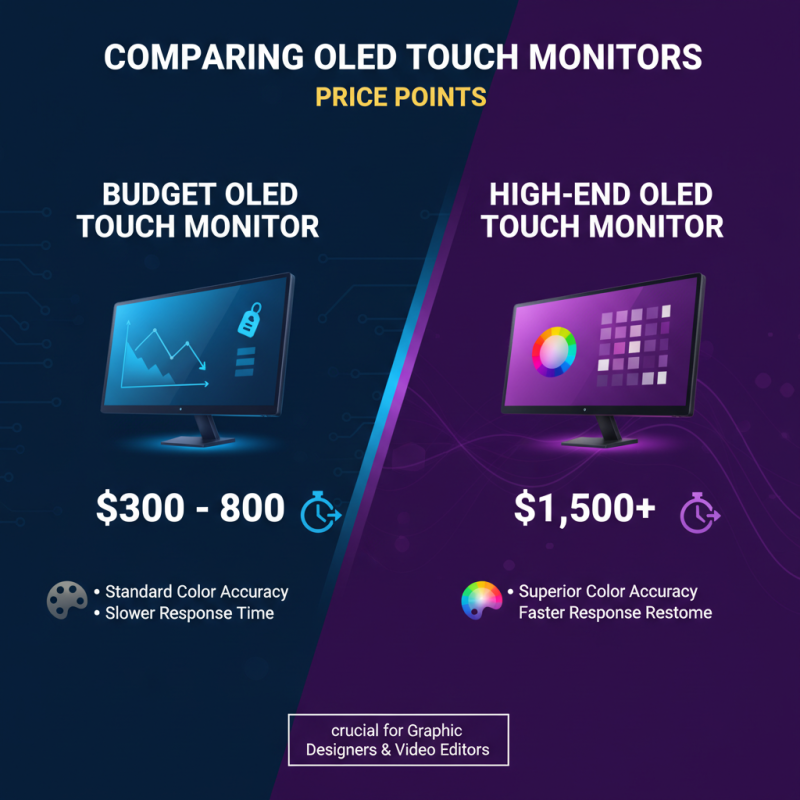
When evaluating OLED touch monitors, the price is a critical factor. Budget models can range from $300 to $800, while high-end models often exceed $1,500. According to recent industry reports, high-end OLED monitors often feature better color accuracy and faster response times. This is crucial for graphic designers and video editors who rely on precise color reproduction.
When considering a monitor, assess screen resolution and size. A 4K resolution is ideal for detailed work, while a 27-inch monitor strikes a balance between usability and desk space. However, a larger screen can enhance productivity. Don't ignore the importance of touch sensitivity; some budget monitors struggle in this area, leading to frustration during use.
An important tip: examine user reviews and expert opinions before making a purchase. Often, early adopters provide insights that official reviews may overlook. Also, keep an eye on warranty and support options, as these can vary significantly between price ranges. While high-end models promise advanced features, budget options can still meet basic needs for many users. But, be prepared to compromise on aspects like brightness and contrast levels.