What is COB Character LCD and How Does It Work?
The world of display technology continues to evolve, with various options available for different applications. Among them, the COB Character LCD stands out for its simplicity and effectiveness. Understanding how this technology works can provide insights into its advantages and limitations.
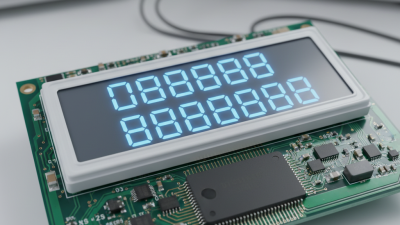
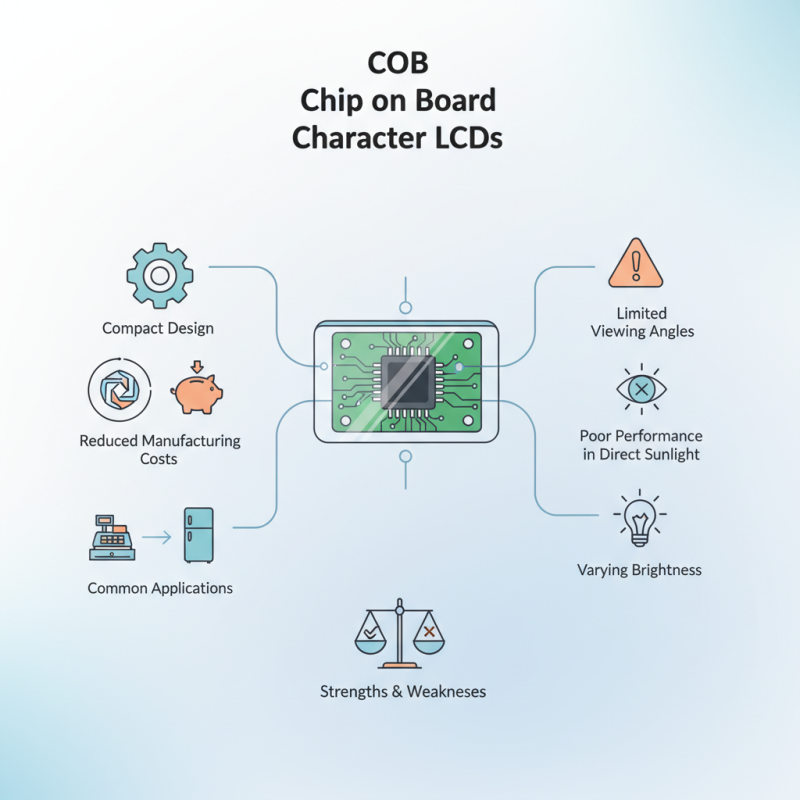
COB, or Chip on Board, refers to a method where the LCD chip is directly mounted onto the circuit board. This allows for a compact design and reduced manufacturing costs. These displays are often used in electronics due to their clear readability. For instance, they can be found in devices like cash registers and home appliances.
Yet, while COB Character LCDs are efficient, they are not without flaws. The viewing angles are sometimes limited, and brightness can vary. Additionally, they may not perform well in direct sunlight. Effective use of this technology requires careful consideration of these factors. Understanding both the strengths and weaknesses is crucial when deciding on a display solution.
What is COB Character LCD?
COB Character LCD stands for Chip-On-Board Character Liquid Crystal Display. It is a type of display technology that allows for compact and efficient screen designs. The characters are printed directly onto the LCD glass, which reduces the need for separate packaging. This gives a sleeker look and makes production simpler.
The display operates using liquid crystals. When electricity passes through the panel, the crystals align and block or allow light. This creates visible characters. The simple setup makes it easier for manufacturers to integrate into devices. However, there can be limitations. Sometimes, the viewing angles might not be ideal. This can impact how the information is perceived.
Tips: When choosing a COB Character LCD, consider the required resolution. Higher resolution means clearer text and images. Check the voltage requirements too. Some applications might require specific voltage levels.
In some cases, the longevity of the display can be a concern. Over time, if it is not used properly, the characters may fade. Regular maintenance can help extend its life. Make sure the display is protected from extreme conditions. This helps to maintain its functionality and clarity.
Understanding the Structure of COB Technology
COB (Chip on Board) character LCDs are increasingly popular in various electronic displays. The structure of COB technology contributes significantly to their efficiency and functionality. This technique combines multiple components, placing them directly on a printed circuit board. This design reduces space and improves performance by lowering the parasitic capacitance and resistance, providing clearer images.
COB displays offer several advantages. They are compact, which allows for thinner devices. A recent report highlights that COB technology can reduce assembly costs by up to 30%. However, there are challenges. The manufacturing process requires precision, and defects can lead to significant failures. Flaws may diminish display quality and lead to higher long-term costs.
**Tip:** When designing devices with COB LCDs, consider conducting rigorous testing. This ensures quality and performance meet expectations.
Overall, understanding the COB structure helps in creating better products. The seamless integration of components boosts reliability. Awareness of potential issues is crucial before implementation. Designing with these considerations can improve outcomes significantly.
How COB Character LCD Works: A Detailed Mechanism
COB Character LCDs, or Chip-On-Board displays, utilize a unique assembly method. In this system, the LCD chip is directly mounted on the printed circuit board (PCB). This design minimizes the need for additional packaging. Such a compact structure often leads to improved reliability.
The mechanism behind COB Character LCDs is simple yet effective. The display consists of a liquid crystal layer sandwiched between two polarizers. When voltage is applied, the liquid crystals align and modify light passage. The result is a character display with clear visibility. Connection between the LCD and PCB is essential. Soldering the chip directly enhances durability. However, this can also complicate repairs.
Though their design has advantages, challenges arise. Heat dissipation may become an issue. An overheated LCD can lead to decreased lifespan. Additionally, resolution may not be as high as other technologies. Some users may find limitations in graphics. Choosing the right display for your project requires careful consideration. Each application has unique demands, influencing the final choice.
Advantages of Using COB Character LCD Displays
COB Character LCDs, or Chip on Board displays, offer significant benefits in various applications. One major advantage is their compact design. They occupy less space, making them ideal for tight installations. This is crucial in devices where every millimeter counts. According to industry reports, COB technology reduces the space requirement by up to 50% compared to traditional LCDs.
Another benefit is their improved durability. COB Character LCDs are less prone to damage due to their integrated design. The encapsulation protects against environmental factors like moisture and dust. This can prolong the lifespan of displays in user devices. Data indicates that devices equipped with COB technology experience 25% fewer failures than older models.
Moreover, these displays often feature enhanced visibility. High brightness levels and better contrast ratios can improve readability in various lighting conditions. They can operate efficiently even under direct sunlight. Although some designs may suffer from limited viewing angles, the overall performance remains commendable in most scenarios. Users may need to consider positioning carefully for optimal results. Balancing advantages with minor drawbacks is essential for effective implementation.
Applications of COB Character LCD in Modern Technology
COB character LCDs, or Chip-On-Board character liquid crystal displays, are integral to many modern devices. They provide clear, crisp text output in various applications. These displays are often used in handheld devices, medical equipment, and industrial automation. A recent industry report noted that the global market for LCDs is projected to grow by over 5% annually, driven by increasing demand for compact displays.
One notable application of COB character LCDs is in consumer electronics. Manufacturers favor these displays for their energy efficiency and space-saving design. They fit comfortably in smaller devices. Additionally, in automotive dashboards, COB character LCDs deliver important information efficiently. This enhances user experience and safety.
However, the performance of COB character LCDs can vary. Some models struggle under direct sunlight, impacting visibility. Additionally, while these displays are versatile, not all environments are ideal for their use. Issues with temperature range and operating life can arise in extreme conditions. As technology evolves, addressing these shortcomings will be crucial for broader adoption.
Applications of COB Character LCD in Modern Technology