What is Display Touch Technology and How Does It Work?
Display Touch technology has revolutionized how we interact with devices. This innovative approach lets users engage with screens directly through touch. It blends the digital world and reality seamlessly.
The core principles of Display Touch involve several layers of technology. Each layer plays a vital role in ensuring that your touch is detected accurately. You tap, swipe, or pinch, and the screen responds instantly. This interaction feels natural and intuitive.
Yet, the technology is not flawless. Sometimes, it misinterprets gestures or struggles in certain conditions. Users might feel frustrated when it doesn't behave as expected. Understanding these limitations is crucial for future developments and improvements in Display Touch.
What is Display Touch Technology: Definition and Overview
Display touch technology has transformed how we interact with screens. It allows users to control devices through touch input. This technology is prevalent in smartphones, tablets, and touch-enabled monitors. Its functionality relies on various methods, including capacitive and resistive touch sensing.
Capacitive touch screens detect changes in an electrostatic field when a finger touches the surface. They are sensitive and support multi-touch gestures. However, they can sometimes misinterpret light touches or foreign objects. On the other hand, resistive touch screens respond to pressure, making them ideal for use with styluses. Yet, they lack the clarity and responsiveness of capacitive screens.
While touch technology is impressive, it is not perfect. Screen malfunctions can frustrate users. Some people may find it challenging to use touch screens in bright sunlight. Improving user experiences is an ongoing challenge. There is still much room for innovation and refinement.
What is Display Touch Technology and How Does It Work?
| Dimension |
Description |
| Technology Type |
Capacitive and Resistive |
| Sensor Technology |
Optical, Infrared, and Pressure-sensitive |
| Common Applications |
Smartphones, Tablets, Kiosks, ATMs |
| User Interaction |
Touch gestures, Multi-touch capabilities |
| Advantages |
Intuitive interface, Quick response, Versatile input methods |
| Limitations |
Sensitivity to environment, Durability concerns in some types |
The Principle Mechanisms of Touchscreen Functionality
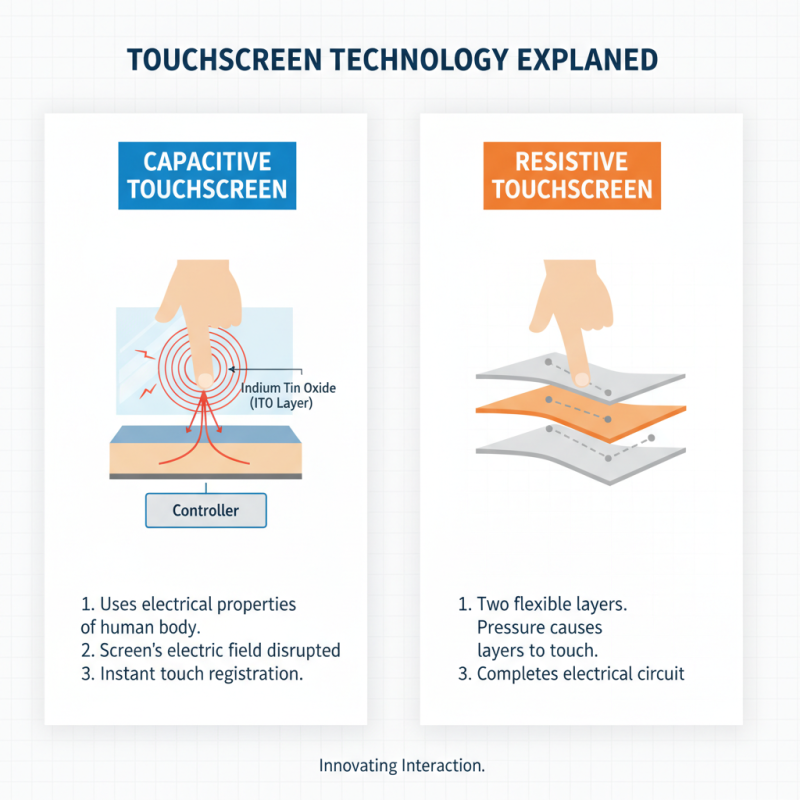
Touchscreen technology has transformed how we interact with devices. At its core, the principles behind touchscreen functionality rely on a few key mechanisms. Capacitive and resistive touchscreens are the two main types. Capacitive screens detect touch through the electrical properties of the human body. When a finger comes close, it disrupts the screen's electric field, registering touch instantly.
Resistive screens, on the other hand, respond to pressure. They consist of two transparent layers separated by a small gap. When pressed, these layers make contact, sending a signal to the device. This method can be less responsive than capacitive technology, especially with multiple touches. Yet, it works well for stylus use and in harsh conditions where gloves might be necessary.
While touchscreen tech seems straightforward, challenges often arise. For instance, users can accidentally trigger functions with palm touch. Calibration issues can also lead to imprecise inputs. Understanding these limitations can help improve user experience. Exploring different touchscreen types opens a path to better interaction designs in the future.
Types of Display Touch Technologies and Their Applications
Touch technology has transformed how we interact with devices. It comes in various types, each with unique advantages. The most common types include resistive, capacitive, and infrared touch technologies.
Resistive touch screens are layers of flexible material. They require pressure to register a touch. This makes them great for outdoor use or with stylus pens. However, they do not support multi-touch features very well, limiting user experience.
Capacitive touch screens, on the other hand, detect the electrical properties of the human body. They offer a more responsive experience and support multi-touch gestures. These screens are often found in smartphones and tablets. However, they can struggle in wet conditions and can be more fragile.
Infrared touch technology employs sensors across the display’s edges. It detects invisible light beams interrupted by touch. This technology is robust but can be expensive to implement. Understanding these differences is vital for choosing the right technology for specific applications.
Market Trends and Growth Statistics in Touchscreen Technology
The touchscreen technology market is experiencing remarkable growth. Increasing consumer demand drives innovation in display touch technology. Touchscreens are now essential in various sectors. From smartphones to industrial applications, their versatility is clear. The global touchscreen market is projected to reach significant milestones in the coming years.
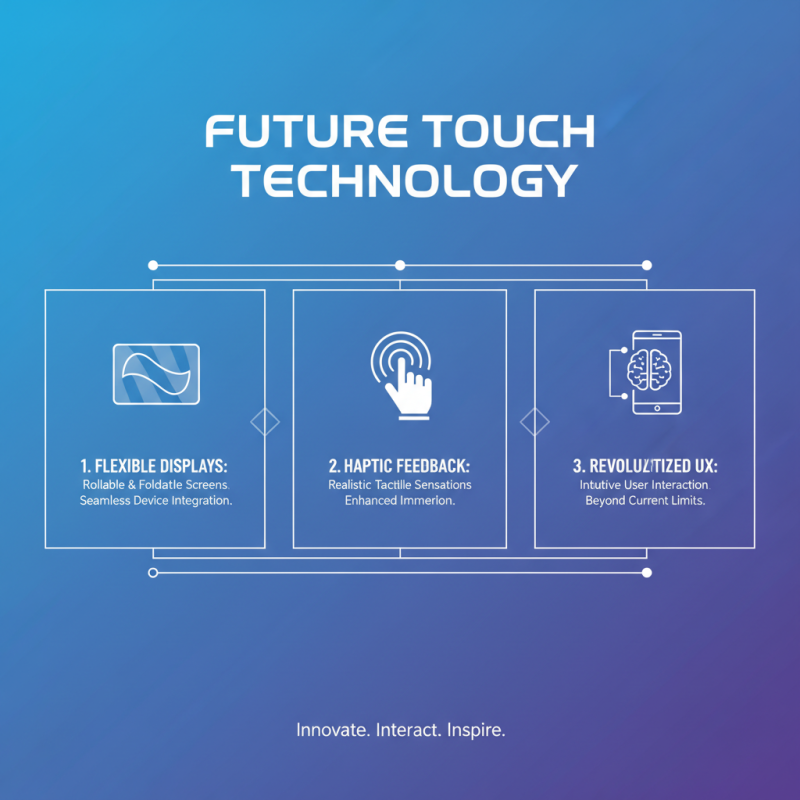
A surge in interactive devices creates opportunities and challenges. Manufacturers face pressure to enhance user experience. This means improving sensitivity and reducing response time. Emerging technologies like haptic feedback seek to create more immersive interactions. However, there are hurdles. Significant investment in research is often required.
Sustainability also plays a role in market trends. Consumers increasingly favor eco-friendly technology. Manufacturers must balance quality and environmental impact. As the market evolves, adapting to these new demands can be difficult. Companies need to reflect on their practices. Continuous adaptation is crucial for success in this competitive landscape.
Market Trends in Touchscreen Technology