What is Touch OLED Displays and How Do They Work?
Touch OLED Displays represent a significant advancement in display technology. These screens combine the vibrancy of OLED with touch sensitivity. This unique blend allows for an engaging user experience. Imagine the rich colors and deep contrasts of an OLED screen, enhanced by the direct interaction of touch.
Despite their impressive capabilities, Touch OLED Displays are not without challenges. For instance, the cost of manufacturing can be high. Additionally, there might be differing opinions on durability compared to traditional displays. It's essential to weigh these factors.
The technology behind Touch OLED Displays is fascinating. It employs organic materials that emit light when energized. This approach results in stunning visuals. However, the complexity of this technology can lead to misunderstandings. Overall, Touch OLED Displays continue to spark curiosity and innovation in the tech world.
What is Touch OLED Technology?
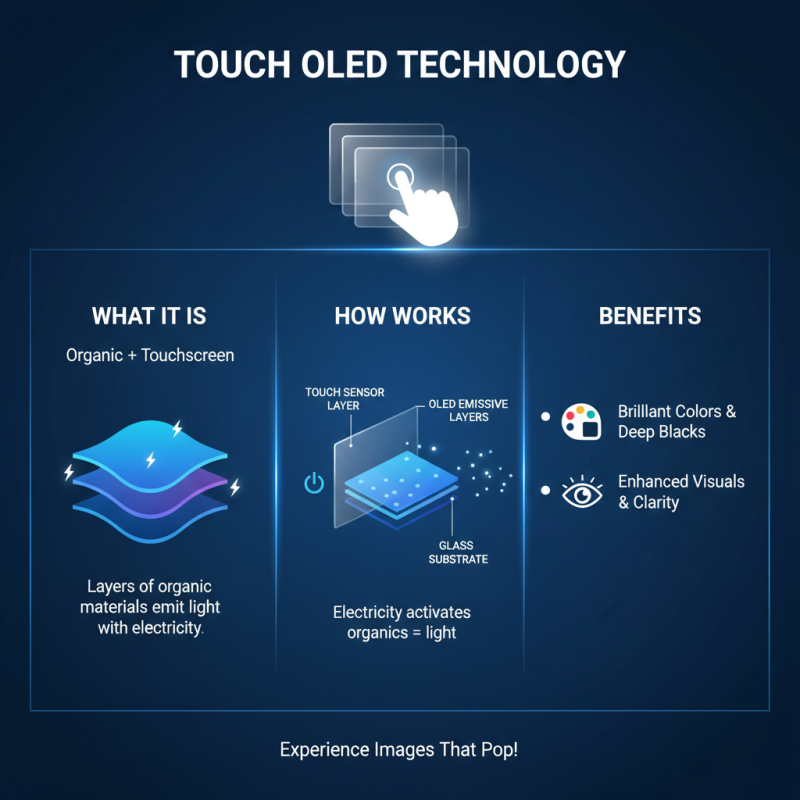
Touch OLED technology combines organic light-emitting diodes with touch-sensitive screens. It creates vibrant displays using layers of organic materials. These materials emit light when electricity passes through them. The result is bright colors and deep blacks. This makes images pop and enhances visual experiences.
In these displays, touch sensitivity is seamlessly integrated. A user’s finger interacts with the screen, triggering sensors below the surface. The beauty lies in the thinness of the panel, allowing for sleek designs. However, touch responsiveness doesn't always match expectations. Some users may experience input lag. This can be frustrating during gaming or fast-paced tasks.
Durability is another area for reflection. While OLEDs offer amazing visuals, their longevity is a concern. Over time, brightness can degrade. This creates a need for caution in usage and care. Additionally, the technology may not perform well in direct sunlight. Colors can wash out under harsh lighting. Embracing this blend of technology comes with its own challenges and considerations.
The Structure of OLED Displays
OLED displays are fascinating for their unique structure. These displays consist of several layers, which contribute to their impressive performance. The core component is a series of organic compounds that emit light when an electric current passes through them. This is different from traditional displays that use backlighting.
Each OLED screen typically has a substrate, an emissive layer, and a conductive layer. The substrate is usually made of glass or plastic, providing support. The emissive layer contains organic molecules that glow in response to electrical stimulation. Admittedly, ensuring consistent quality in these layers can be challenging. Each layer requires precise manufacturing conditions.
Color vibrancy is another subject worth discussing. OLED displays are known for their rich colors and deep blacks. However, they can sometimes suffer from screen burn-in, an issue that arises from static images being displayed for extended periods. This imperfect aspect reminds us that, while technology advances, it still has limitations that need to be acknowledged.
What is Touch OLED Displays and How Do They Work? - The Structure of OLED Displays
| Component |
Function |
Materials Used |
| OLED Layer |
Emits light when an electric current is applied |
Organic compounds |
| Substrate |
Supports the OLED layers |
Glass or Plastic |
| Transparent Electrode |
Conducts electricity to the OLED layer |
Indium tin oxide (ITO) |
| Touch Sensor |
Detects touch input on the display |
Conductive materials and capacitive technology |
| Encapsulation |
Protects OLED materials from moisture and oxygen |
Barrier films |
How Touch Functionality is Integrated into OLED Displays
Touch functionality integrated into OLED displays has transformed user interaction dramatically. The combination of tactile response and vibrant visuals enhances engagement. According to a recent industry report, the global touch display market is expected to reach $39 billion by 2026. This growth reflects the increasing demand for seamless interaction across devices.
These displays utilize a capacitive touch technology that allows users to interact directly with the screen. When a finger touches the screen, it disrupts the electrostatic field. This change is detected and interpreted by the device's software. A study showed that 80% of consumers prefer touchscreens over traditional buttons. However, challenges remain in ensuring durability and responsiveness.
Innovations in materials and design are ongoing. Transparent conductive materials, like indium tin oxide, are commonly used. Yet, their fragility raises concerns about longevity in everyday use. While OLED technology offers stunning colors, the integration of touch functionalities can sometimes lead to issues like ghosting or delayed responses. Balancing performance and user experience is crucial for future developments. The need for improvement remains apparent.
The Working Principle of Touch OLED Displays
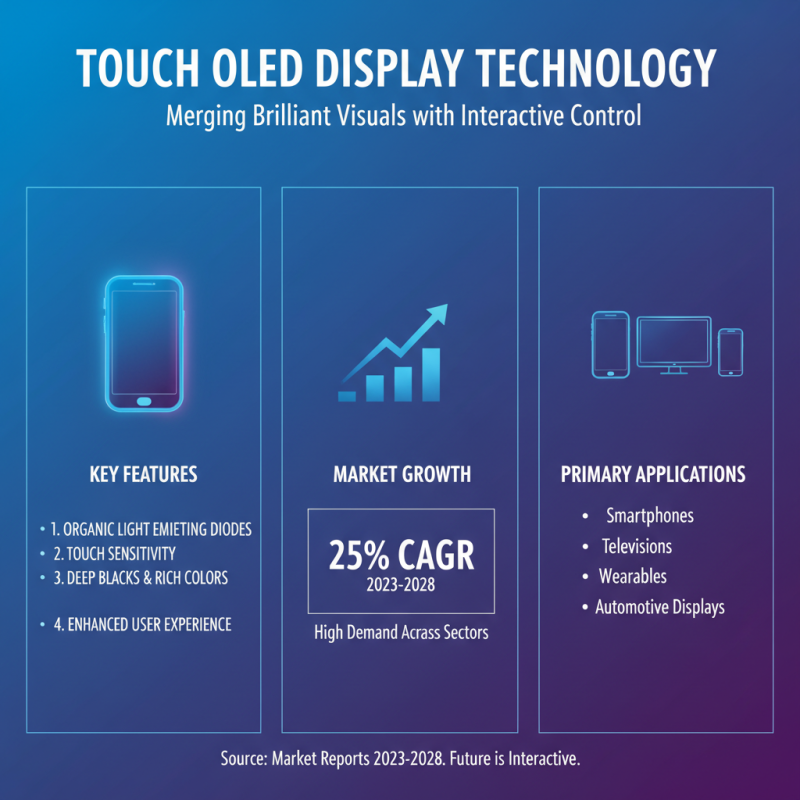
Touch OLED displays combine organic light-emitting diode technology with touch sensitivity. They provide vibrant colors and deep blacks, enhancing user experience. These displays are becoming more popular, with market reports projecting a compound annual growth rate (CAGR) of 25% from 2023 to 2028. This growth shows a high demand in various sectors, including smartphones and televisions.
The working principle relies on a layer of organic compounds that emit light when electricity flows through them. This layer sits between two conductive electrodes. A touch sensor detects input by measuring capacitance changes, allowing precise tracking of user gestures. The display can show images and respond to touch simultaneously, but this dual functionality can sometimes lead to slower response times when too many processes run concurrently.
Issues like screen burn-in and limited lifespan pose challenges for manufacturers. In report findings, over 30% of users experience burn-in effects within the first year. This can affect the display's longevity. Therefore, ongoing research is necessary for improving durability. Developers should focus on these aspects to enhance overall performance and user satisfaction.
Advantages and Applications of Touch OLED Technology
Touch OLED technology is reshaping the way we interact with screens. It combines vibrant OLED displays with touch functionality. This integration allows users to experience clearer images along with responsive touch controls. The result is an immersive experience, whether you are watching a movie or browsing through apps.
One significant advantage of touch OLED displays is their superior color accuracy. They exhibit deeper blacks and brighter colors, enhancing visuals in various settings. This technology is widely used in smartphones, tablets, and TVs. The tactile feedback from these screens adds an extra layer of engagement for users. However, durability can be a concern. Over time, wear and tear may affect responsiveness.
Moreover, touch OLED displays are increasingly found in unique applications. They are appearing in cars, art installations, and retail environments. These displays offer interactive experiences that captivate users. However, not all interactions are seamless. Sometimes, accuracy issues can arise with multi-touch gestures. Continuous refinement in technology is essential to address these challenges. Despite these imperfections, touch OLED continues to push the boundaries of user experience.
Touch OLED Displays - Advantages and Applications
Touch OLED displays offer a range of significant advantages over traditional display technologies. This chart illustrates key benefits, with high brightness, energy efficiency, and thin form factor being the standout features that make this technology suitable for various applications.