Leave Your Message

Name*

Phone number*

Email Address*

Country*

Message*

Annual Quantity*

Application*

What Are the Top Custom LCD Display Types in 2026?

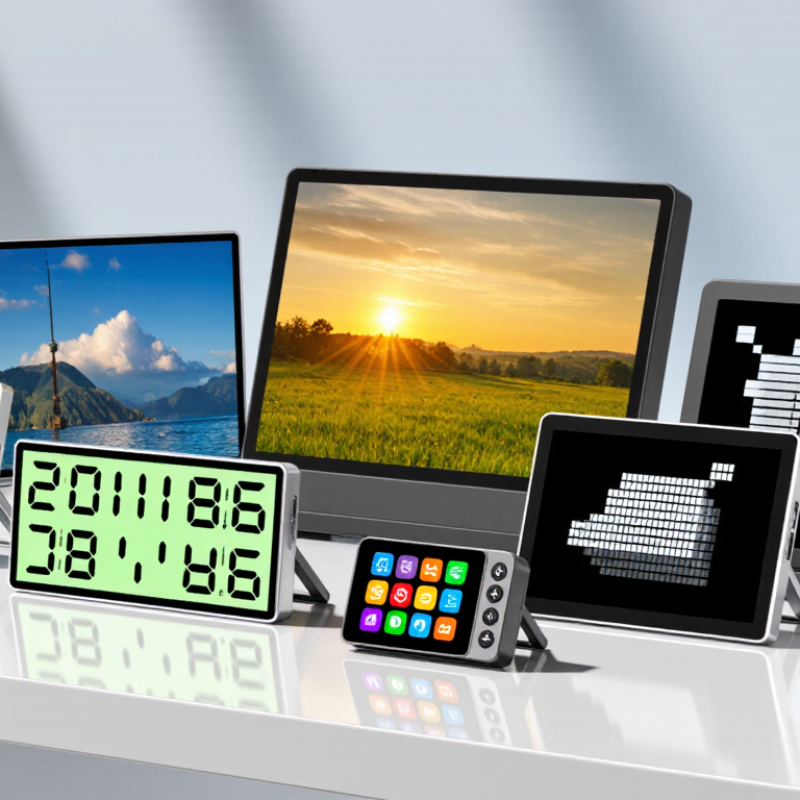
Custom LCD Display choices in 2026 are shaped by a simple question: what must the screen do, and where must it do it? A compact appliance may need crisp characters and low power use. A handheld instrument may need a color TFT panel, touch input, and readable graphics. A dashboard or outdoor meter faces glare, temperature shifts, and limited installation space. The right display starts with the real operating conditions—not a feature list.

This guide compares common options, including segment, character, graphic, monochrome, and TFT displays. It also considers technologies such as IPS viewing, transflective construction, and sunlight-readable backlighting. Each choice has trade-offs. A bright panel can draw more power; a thin bezel may complicate integration. Small details matter.

“Choose for the viewing conditions and the interface—not the headline specification.” This is an illustrative quote from fictional composite specialist Maya Chen, not a sourced statement by a real industry expert. It captures a useful design principle, but it cannot replace validated engineering advice. Reviewers should check viewing angle, contrast, temperature range, interface, mounting, and lifecycle needs against the actual product. Some projects still discover their constraints too late. That deserves reflection. The sections ahead explain how leading custom LCD types differ, what each handles well, and which questions to settle before requesting a sample.
What Are the Top Custom LCD Display Types in 2026?

How Custom LCD Displays Are Classified by Technology and Application

Custom LCD displays are classified by panel technology, optical behavior, and intended application. TFT LCDs use active-matrix control, making them suitable for detailed graphics and frequent screen updates. Within this group, TN panels can offer fast response at a modest cost, while IPS panels generally provide wider viewing angles. VA panels can deliver stronger contrast, though viewing performance varies by design. Trade-offs remain.

Application changes the specification. Industrial control panels often need clear text, long service life, and reliable operation across changing temperatures. Vehicle displays may require wide viewing angles and readability under direct sunlight. Medical instruments benefit from stable image presentation, but their display needs depend on the device and clinical workflow. Outdoor terminals may use transflective LCDs, which combine reflected ambient light with a backlight. Monochrome displays still make sense for simple meters: numbers can be easier to read than a crowded color interface.

A useful selection process starts with the viewing distance, ambient light, temperature range, and required information. Then compare resolution, touch compatibility, power use, and available mounting space. A bright screen is not automatically easier to read; glare and viewing angle matter too. Prototypes can also mislead. A display that looks crisp on a desk may feel cramped inside a sunlit control cabinet. Testing in the real enclosure often reveals overlooked details, such as connector clearance or reflections from a protective cover.

Custom Character and Segment LCDs for Basic Information Display

Custom character and segment LCDs suit products that need clear, fixed information without the cost or complexity of a full graphic display. A character LCD can show short text, such as “Filter due,” while a segment design can display large digits, battery bars, or a few custom symbols. Think of a thermostat’s bold temperature reading or a meter’s small status icons. Simple, but useful.

The wider electronics market is growing: World Semiconductor Trade Statistics’ autumn 2024 forecast put global semiconductor sales at US$627 billion for 2024, up 19% year over year. This is not an LCD-specific demand figure, but it signals a broad expansion in electronic products that may use compact displays. For a custom LCD, specify viewing angle, operating temperature, backlight needs, and connector position early. Test the actual glass under the product’s lighting; a symbol that looks crisp on a desk may fade in sunlight. A small compromise is unavoidable. Adding too many segments can make the layout harder to read, not better. Check cold-start performance, too. That detail is easy to overlook.

Custom Graphic and Monochrome LCDs for Flexible Visual Content

Custom graphic and monochrome LCDs remain practical choices in 2026 when a product needs clear information without a full-color interface. A graphic LCD lets designers arrange pixels into menus, symbols, small charts, or changing status screens. On a handheld meter, a large numeral, battery icon, and warning marker can share one compact display. That flexibility matters. But it depends on resolution, viewing angle, and the controller’s memory. Monochrome panels use fewer visual elements, often making readings crisp and power use modest. They suit thermostats, meters, and control panels where people need numbers at a glance.

Choosing between them starts with how people use the device, not pixel count alone. Check the lighting: a display readable at a desk may wash out beside a sunny window. Confirm operating temperature, backlight needs, connector placement, and firmware support before fixing the enclosure. Custom layouts can reduce clutter, yet every extra icon needs room and a clear meaning. Small text looks efficient on paper. Not always. A prototype should be checked from the actual viewing distance, though this step is sometimes skipped. That can lead to a layout that works on screen but feels cramped in the finished product.

What Are the Top Custom LCD Display Types in 2026?

Example graphic LCD resolutions and their total pixel counts

These are examples of commonly used graphic LCD resolutions, not a ranking of market share. Pixel counts are calculated by multiplying horizontal and vertical resolution. Monochrome displays can suit clear, low-power interfaces, while color displays support richer visual content; the best choice depends on viewing, power, and interface requirements.

Custom TFT LCDs for Color, Resolution, and Interactive Interfaces

Custom TFT LCDs are a strong choice when a product needs vivid color, readable detail, and a responsive interface. Their active-matrix pixels support sharp images and smooth updates, useful for control panels, handheld instruments, and medical equipment. The difference is visible. A map, warning icon, or small graph can be easier to interpret when color and contrast are tuned to the task.

Customization covers more than screen size. Engineers can select resolution, brightness, viewing angle, touch technology, and the shape of the display area. A device used beside a bright window may need stronger backlighting and an anti-glare surface. A touch panel used with gloves needs careful testing; not every touch controller responds equally well. Interface choices also matter, since the display must work with the product’s processor and software.

More pixels are not automatically better. Higher resolution can sharpen text, but it may increase processing demands, power use, and cost. This is easy to overlook when comparing specification sheets. Review the actual screen content, viewing distance, and lighting conditions before choosing a panel. A simple prototype can reveal whether labels remain legible and touch targets feel comfortable. Real use may still expose compromises, especially when the enclosure limits brightness or viewing angle.

What Are the Top Custom LCD Display Types in 2026? — Custom TFT LCDs for Color, Resolution, and Interactive Interfaces

Display Type Color and Viewing Characteristics Resolution Options Touch and Interface Options Typical Strengths Best-Fit Applications
TN TFT LCD Color TFT; viewing angles and color consistency are generally more limited than on IPS panels. Common formats include QVGA (320 × 240), WVGA (800 × 480), and other panel-specific sizes. Can be paired with projected-capacitive or resistive touch. The touch controller and display interface are selected for the device design. Often suitable for cost-conscious designs and applications where fast pixel response is useful. Basic instruments, simple control panels, and products viewed mainly from directly in front.
IPS TFT LCD Color TFT with broad viewing angles; many IPS panels specify viewing angles near 178° horizontally and vertically, depending on the panel. Available in compact formats through high-resolution options, including HD (1280 × 720) and Full HD (1920 × 1080) on suitable sizes. Commonly combined with projected-capacitive touch for multi-touch interfaces; resistive touch is also possible where appropriate. Consistent appearance across viewing positions and strong suitability for graphics, menus, and color-rich content. Medical and industrial interfaces, handheld equipment, vehicle displays, and interactive products.
VA TFT LCD Color TFT; typically offers strong contrast, while viewing behavior and color shift vary by panel design. Resolution depends on panel size and design; common LCD formats can range from QVGA to HD and beyond. Touch overlays can be designed with capacitive or resistive sensing; optical performance should be checked with the finished stack. High contrast can help make dark areas and image detail more distinct. Equipment dashboards, information displays, and applications where contrast is a priority.
Transflective TFT LCD Uses reflected ambient light as well as a backlight; outdoor readability depends on lighting, panel construction, and backlight settings. Offered in application-specific sizes and resolutions; the available format depends on the selected panel design. Touch is optional. Cover glass, touch sensors, and bonding choices should be evaluated for reflection and readability. Can remain readable in bright ambient conditions while retaining backlight operation for dim environments. Portable instruments, outdoor handheld devices, and equipment used in changing light conditions.
High-Brightness TFT LCD Usually an LCD configuration with a brighter backlight; color, viewing angle, and sunlight readability depend on the underlying panel and optical stack. Custom sizes and resolutions are available across multiple TFT panel formats. Capacitive or resistive touch can be added. Optical bonding may reduce internal reflections in some designs. Designed to improve visibility in bright environments; higher backlight output can increase power use and heat. Outdoor kiosks, marine equipment, industrial terminals, and vehicle-mounted interfaces.
Custom Touch TFT LCD Can use TN, IPS, VA, or another suitable TFT panel technology; color and viewing performance follow the selected panel. Common source formats include QVGA (320 × 240), HVGA (480 × 320), WVGA (800 × 480), XGA (1024 × 768), HD, and Full HD. Projected-capacitive touch supports multi-touch on compatible designs; resistive touch registers pressure and can suit gloved or stylus operation. Controller and host interfaces must be matched. Combines display, touch sensor, cover lens, and controller into a device-specific interface. Smart appliances, handheld terminals, human-machine interfaces, and interactive control systems.

Selection note: Resolution formats and viewing-angle figures are examples, not guarantees for every panel size. Brightness, color performance, touch behavior, interface compatibility, and power consumption should be confirmed against the final display specification and assembled device.

How to Match a Custom LCD Type to Its Intended Use in 2026

Choosing a custom LCD in 2026 starts with the task, not the screen size. A factory temperature controller may need crisp digits and reliable operation, while a handheld diagnostic tool may require detailed graphics. Segment and character displays suit fixed readings with simple layouts. Graphic LCDs offer more flexible icons and menus, often with modest power needs. TFT LCDs handle color, motion, and dense interfaces, but usually demand more power and careful software integration.

Match the display to its surroundings. A wide viewing angle matters when several people read a panel from different positions, making IPS-style TFTs worth considering. For bright outdoor equipment, compare transflective options or specify sufficient brightness and test the finished unit in direct sunlight. Reflections can still spoil visibility. Small detail. Big consequence. In a battery-powered meter, backlight settings and the controller’s sleep behavior may matter more than peak brightness.

Check operating temperature, available space, connector placement, and the host system’s interface before approving a design. Ask for samples, then test them in the actual enclosure; a display that looks clear on a bench may appear dim behind tinted cover glass. Also confirm viewing direction, touch requirements, and expected production life. This is easy to overlook. Customization can solve a mismatch, but it can also add cost or delay if specifications change late. A practical choice balances readability, power, mechanical fit, and maintainability—not just resolution.